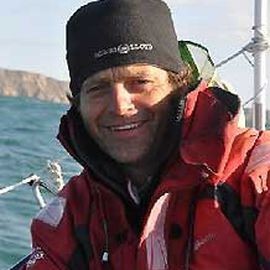
And he demonstrates how those qualities may be used in many sectors of life, whether in a keynote or after-dinner address. He saw active action in the Falklands War at the age of seventeen and then again in the Middle East as a former Royal Marines Commando, filmmaker, sailor, and adventurer.
Following his military service, he continued his lifelong love of the water by becoming a professional sailor who skippered luxury boats all over the world. He got aware of an extreme adventure race to row from the Canary Islands to the Caribbean around the turn of the century, desperate for an exciting challenge.
In 2001, he embarked on a three-thousand-mile journey with his brother Steve in a twenty-one-foot-long rowing boat, successfully crossing the enormous Atlantic Ocean (for the first time).
Mick attempted to row solo across the North Pacific Ocean from Choshi in Japan to the renowned span of the Golden Gate Bridge in San Francisco two years later, inspired by the incredible journey across the Atlantic.
His endeavor was cut short less than a thousand miles from the start due to major equipment failure caused by a succession of severe storms. He returned to Japan, repaired his boat, and started off again the next year, beaten but not defeated.
Following that, he faced typhoons, collisions, sharks, and killer whales in one of the most remarkable adventures of his life. Mick rowed 4,500 kilometers across the vast North Pacific Ocean. Due to equipment failure, the crew spent almost the whole journey without contact with the outside world.
The disaster occurred on day 109, two-thirds of the way through the journey, with a successful world-first finish tantalizingly close. A sudden wave overturned his boat, trapping him inside the sinking cabin, his beloved rowing boat flipped and disabled.
Mick fought against all obstacles to escape and survive in the North Pacific's stormy, dark, cold, merciless waters until help arrived the next night. Mick was actually snatched from the jaws of death by a passing cargo ship during a perilous rescue mission.
Despite this second near-fatal failure and the loss of his prized rowing boat, Mick determined to return to the North Pacific and finish his epic journey.
Mick began preparing for his third North Pacific rowing trip by designing and building a state-of-the-art, brand new rowing boat, which he would call 'Bojangles.' The tale of the North Pacific, however, was about to take one more important turn.
In 2005, while working as a safety skipper and ocean rowing consultant for the Atlantic Rowing Race Organisers, Mick rescued a two-man team early in the race after a medical emergency and safely returned them and their vessel to port.
With one of the team members unable to continue, Mick was 'persuaded' to take over as the wounded crew member, and two days later he set sail on his second two-man Atlantic crossing. The result was one of the most thrilling Atlantic rowing races ever witnessed.
As the Atlantic saw some of the worst weather on record, seventeen of the fleet's twenty-six vessels would capsize, and six of them would be lost. Mick and Andrew Morris (his last-minute new rowing partner) pushed through everything that came their way and arrived in Antigua after a memorable sixty-day journey.
It was the unintended last piece of the North Pacific jigsaw puzzle for Mick. After completing such an exhausting and difficult crossing of the Atlantic with a partner he barely knew (at least at first), he realized that the key to success in the North Pacific was to attempt it as a two-man team rather than solo.
This would allow them to "always have someone at the coalface when it's possible to row," as he put it. Mick's obvious option for the position was Chris Martin, a world championship bronze medalist flat water rower, and successful Atlantic rower; thankfully, he agreed to come on board, and the North Pacific Endeavour became a two-man effort in 2006.
Aboard May 8th, 2009, they set sail on the 'Bo' from Choshi, Japan, for what would become one of the greatest nautical team endeavors of all time.
Rowing a rigorous two-hour on, two-hour off schedule around the clock, the two friends would stay at sea for 189 days, 10 hours, and 55 minutes before achieving their objective and rowing 'Bo' beneath the historic Golden Gate Bridge span on November 13th (Friday).
Despite tremendous heat and cold, typhoons, storms, hunger, and everything else Mother Nature could throw at them, they persevered and triumphed. Following that, Discovery Channel created a documentary on the epic journey called "Rowing the Pacific," which aired for the first time in the UK in May 2012 before being broadcast worldwide on the Discovery network.
A sixty-minute television documentary, however, can only scratch the surface of this extraordinary maritime journey, and Mick is now ready to personally tell this inspiring, exhilarating, and one-of-a-kind narrative to any audience. Mick is presently located in Brighton, UK, and works as a marine security expert in the Indian Ocean. He is currently in discussions for further adventure-focused documentary films.