He was speaking with his agency in a phone booth in London's Leicester Square when he was advised that he would have to alter his name again since another actor was already using the name Michael Scott. His agency demanded that he come up with a new moniker right now.
When he was looking for ideas, he noticed that The Caine Mutiny was playing at the Odeon, so he decided to alter his name to Michael Caine. He once told an interviewer that if he had turned around, he would have been Michael One Hundred and One Dalmatians.
Caine rose to prominence as an upper-class British army officer in the 1964 picture Zulu, after a series of lesser parts. This was ironic because Caine was known for speaking with a regional accent rather than the Received Pronunciation that had hitherto been deemed suitable for cinema performers.
Caine's working-class cockney, like The Beatles' Liverpudlian accents, looked to be a breath of new air at the time. Zulu was quickly followed by his two most well-known roles: spy Harry Palmer in The Ipcress File (1965) and woman-chaser Alfie in The Ipcress File (1966). (1966). He went on to appear in two more films as Palmer.
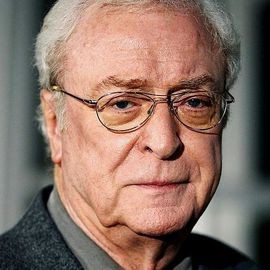
His signature horn-rimmed glasses didn't stop him from pursuing a career as a pin-up model. Caine began the 1970s with Get Carter, a British gangster picture, after finishing the 1960s with the equally legendary The Italian Job and strong performance as an RAF fighter pilot, Squadron Leader Canfield, in the all-star cast of Battle of Britain (1969).
The 1970s were a difficult decade for Caine, with hits like Sleuth (1972) and The Man Who Would Be King (1975) being eclipsed by flops like The Swarm (1978) and Beyond the Poseidon Adventure (1979).
Caine moved between lauded performances in films like Educating Rita (1983) and Mona Lisa (1986) and shamelessly mercenary parts in films like Jaws: The Revenge (as Hoagie Newcombe) (1987) and On Deadly Ground (as Hoagie Newcombe) (1988).
Caine famously stated of the former, "I have not seen the picture, but I hear it is horrible." But I've seen the house that it paid for, and it's fantastic.
Caine's status as an icon had already been established by this time, and recent performances in Little Voice (1998), Last Orders (2001), The Quiet American (2002), and other films have helped to restore his critical reputation. Several of Caine's great films, like The Italian Job, Get Carter, and Alfie, have been recreated to appeal to new, younger audiences.
In Austin Powers in Goldmember, he portrayed Nigel Powers, and in Batman Begins, he played Bruce Wayne/loving Batman's butler Alfred (2005). He has had six Academy Award nominations, winning his first in 1986 for Hannah and Her Sisters and his second in 1999 for The Cider House Rules, both as a supporting actor.
In 1993, he was appointed a Commander of the British Empire (CBE) for services to theatre, and in 2000, he was knighted, taking the name Sir Maurice Micklewhite. When he is not working, Caine still goes by his own name, unlike several actors who adopt their stage name for everyday use.
Caine's voice is easy to imitate, making him a favorite subject for impressionists and mimics.
Most Caine impersonations repeat the catchphrase, Not a lot of people know that, which was never actually used by Caine, except more recently when mocking himself and the mimics who established the catchphrase; it originated with an answering machine message recorded by Peter Sellers, who impersonated Caine very well and said, My name is Michael Caine, in this case.
Peter Sellers is now unavailable. Not many people are aware of this. He has claimed that his four most memorable parts are Alfie, Get Carter, The Italian Job, and The Muppet Christmas Carol, in no particular order.