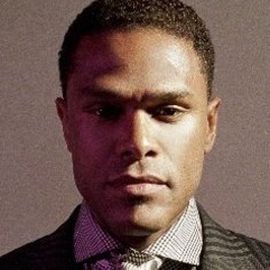
Maxwell was born on May 23, 1973, in Brooklyn, New York; he used his middle name as his stage name to protect his family's privacy and kept his true identity a tightly guarded secret. Maxwell, who is of Puerto Rican and black Caribbean descent, lost his father when he was three years old (in an aircraft accident).
He became a very devout youngster as a result of the event, and he began singing at his Baptist church. Still, it wasn't until he was 17 that he became serious about music when he began creating his own songs on a cheap Casio keyboard provided to him by a friend.
He grew quickly, influenced by early-'80s urban R&B, and by 1991, he was playing in New York clubs, amid mockery from classmates who couldn't picture the quiet, awkward adolescent doing such a thing. He got a recording contract with Columbia in 1994 after establishing a reputation for himself.
Maxwell produced his debut album that year, collaborating heavily with composer Leon Ware (who had co-written most of the material on Marvin Gaye's 1976 album I Want You), guitarist Wah Wah Watson (who had previously collaborated with Gaye), and multi-instrumentalist Stuart Matthewman (a longtime cohort of Sade).
Maxwell's Urban Hang Suite was a romantic concept album in the vein of Marvin Gaye's greatest '70s work, with a more advanced flavor thanks to Prince's influence; inspired by a brief but intense affair, the album's giddy commemoration of devoted procreation could have come across as old-fashioned as its classic influences, given the marketplace dominance of hip-hop soul at the time.
It wasn't released immediately away, in part because of those worries, but a series of changes in Columbia's management had a greater influence on the delay. Maxwell's Urban Hang Suite didn't make its debut until the spring of 1996. Even though Maxwell's song...Til the Cops Come Knockin' had considerable attention, sales were reluctant to take off initially.
However, the gold-selling second song Ascension (Never Wonder) sparked the fire, and Urban Hang Suite reached platinum in less than a year, garnering a Grammy nomination in the process. Maxwell, who had been catapulted to sex-symbol status, capitalized on his success with the MTV Unplugged EP, which was based on his live MTV performance.
With left-field cover selections like This Woman's Work (by art rocker Kate Bush) and Closer, it gained notice and appreciation outside of the R&B scene (the Nine Inch Nails hit). The anticipation for his second full-length album was great, and Embrya debuted at number three on the charts in 1998.
The record received mixed reviews this time around, with some critics saying that Maxwell's ambition had passed the line into indulgence; nonetheless, it duplicated the platinum sales of its predecessor. Maxwell's biggest hit to date was the single Fortunate, an R.
Kelly tune he recorded for the soundtrack of the film Life; it was a huge hit, and Billboard magazine ranked it as the number one R&B hit of the year. He also contributed two songs to the soundtrack of The Best Man later that year.
Maxwell released his third full-length album, Now, in August 2001, which was hailed as a return to his debut's more straightforwardly romantic mood. It debuted at number one on the album charts and immediately became a smash single with Lifetime. Maxwell didn't perform again until the 2008 BET Awards when he sang Al Green's Simply Beautiful.
BLACKsummers'night (the first chapter of a planned trilogy of albums), released in July 2009, was preceded by a handful of private concerts. Pretty Wings, the album's first song, debuted in the Top 20 of the R&B/Hip-Hop chart just three weeks after its release in May.