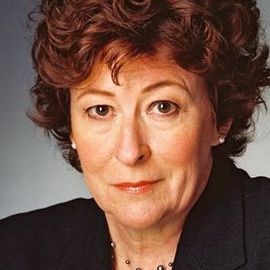
She graduated from College Regina Assumpta in 1967 and went on to the Université de Montréal, where she earned her LL.L. with honours in 1970. During her graduate studies at the University of Ottawa's Faculty of Law (Civil Section), she worked as a Law Clerk for Mr Justice Louis-Philippe Pigeon of the Supreme Court of Canada in 1971-1972.
In 1971, she was admitted to the Quebec Bar, and in 1977, she was admitted to the Law Society of Upper Canada. In 2007, she was named a Companion of the Order of Canada for her services to the Canadian judicial system and her commitment to the global promotion of human rights.
In 2009, she was promoted to Grand Officer of the National Order of Quebec. In 2011, she was given the title of Commander of the National Order of the Legion of Honour.
She has numerous honorary degrees, including a Doctor of Civil Laws from the University of Western Ontario in June 2000, a Doctor of Humane Letters from Mount Saint Vincent University in May 2001, and Doctor of Laws degrees from the University of British Columbia in November 2001, the University of Waterloo in October 2006, the University of Alberta and the University of Guelph in June 2009, and a Doctor of Humane Letters from Mount Saint Vincent University in May 2001.
Emilie, Patrick, and Catherine Taman are her three grown children. Louise Arbour worked as a research worker for the Law Reform Commission of Canada from 1972 to 1973. She later became a Lecturer (1974), Assistant Professor (1975), Associate Professor (1977–1987), and ultimately Associate Professor and Associate Dean at York University's Osgoode Hall Law School (1987).
Until her appointment to the Supreme Court of Ontario (High Court of Justice) in 1987 and the Court of Appeal for Ontario in 1990, she was also Vice-President of the Canadian Civil Liberties Association.
Madam Louise Arbour was appointed as the President of a Commission of Inquiry in 1995, under the Inquiries Act, to investigate and report on occurrences at the Kingston Women's Prison, following claims of mistreatment by inmates.
She was named Chief Prosecutor of the International Criminal Tribunal for Rwanda in Arusha in 1996, as well as the International Criminal Tribunal for the former Yugoslavia in The Hague. She charged then-Serbian President Slobodan Miloevi for war crimes in that role, marking the first time a sitting head of state was brought before an international court.
Milan Milutinovi, President of the Republic of Serbia, Nikola ainovi, Deputy Prime Minister of the Federal Republic of Yugoslavia, Dragoljub Ojdani, Chief of the General Staff of the Federal Republic of Yugoslavia, and Vlajko Stojiljkovi, Minister of Internal Affairs of the Republic of Serbia, were also indicted.
Arbour was appointed to the Supreme Court of Canada by Prime Minister Jean Chrétien in 1999. Arbour has published in the fields of the criminal process and criminal law in both French and English throughout her career. She has worked as an editor for the Criminal Reports, the Canadian Rights Reporter, and the Osgoode Hall Law Journal, among other publications.
Twenty-seven universities have bestowed honorary doctorates on Arbour. In 2005, Arbour and Justice Richard Goldstone were jointly awarded the Thomas J. Dodd Prize in International Justice and Human Rights for their work on the International Criminal Tribunals for the former Yugoslavia and Rwanda.
She's also the focus of Hunt For Justice, a 2005 fact-based Canadian-German made-for-television film that chronicles her effort to charge Bosnian war criminals. Wendy Crewson, a Canadian actress, played Arbour. Louise Arbour Secondary School in Brampton, Ontario, has been named after Ms Arbour by the Peel District School Board.