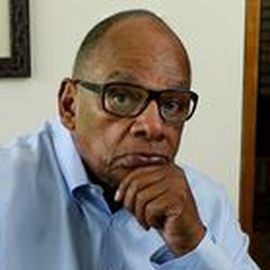
What sets this fascinating and complicated individual distinct from others in the universe is the amazing adventure he embarked on over the following six decades (and counting). After basketball, there is life (and before basketball) Raveling began his work as a marketing analyst for the Sun Oil Company after graduating from Villanova with a BS in Economics.
Note: It was at this time in his life that he had the opportunity to provide extra protection for the late Dr. Martin Luther King, Jr. — on the day that Dr. King delivered, possibly, the greatest address of all time, the “I Have a Dream Speech.” Everyone in America remembers that day, but Raveling in particular.
Later in this biography, there will be an explanation. As a basketball assistant at a college, Raveling returned to basketball in 1964 as an assistant coach at his alma university, earning a reputation as a skilled recruiter almost immediately.
Howard Porter, a scoring and rebounding sensation (he is currently the all-time rebound leader in ‘Nova history) who would lead the ‘Cats to a Final Four appearance, was one of his recruiters. George's work ethic – and results – drew the attention of Lefty Driesell, the freshly appointed Maryland coach, who made George his first hiring.
Raveling maintained his recruiting success at Maryland, landing future Rhodes scholar and NBA star Tom McMillan, as well as a fellow pro.
Years of Nike Raveling joined Nike as Director of Grassroots Basketball after brief stints as a color commentator for Fox Sports and CBS (Pat O'Brien told one of George's aides that he'd never seen anybody so prepared for a production meeting as he was). In the year 2000, he was appointed Director of Global Basketball.
George accepted a promotion to a position established particularly for him at the age of 70 when most people are well into retirement. It's not a sedentary office job with no travel. Raveling was instead named Nike's Director of International Basketball. As a result, George H. Raveling's new chapter begins.
George Raveling's Innovative Ideas and Experiences His first head coaching job (at Washington State) paid him $22,500, plus he had to teach one class.
George understood his institution needed to leverage on the fact that the conference was such a national powerhouse in every sport, based on the idea, "It's not the company you keep, it's the company you maintain." Every piece of information that left the WSU basketball office, from letters to recruits, their parents, and coaches, to interoffice memos, was emblazoned with “The Pac-8, Conference of Champions.” Raveling's concept is still being used by the conference office and the member institutions today.
George had always resided on the east coast, and ideas didn't travel as rapidly back then as they do now.
He was always a "thinking man," and he saw that, although summer basketball camps were popular in the eastern half of the nation as a source of revenue and a recruitment tool, nothing similar existed on the west coast - and he couldn't figure out why.
Cougar Cage Camp quickly established itself as the gold standard for basketball camps, attracting 600 boys each week for each of five sessions, which were all sold out. Each summer, 3000 youngsters from all 50 states and a variety of nations flocked to Pullman, Washington. The year 1972 also saw the passage of Title IX.
George went to one of Iowa City's eateries shortly after taking the Hawkeyes position. He requested Tabasco sauce when his order was delivered. He saw the waitress's worried expression. After some time had gone, George began hunting for his Tabasco sauce. Finally, a waitress with a bottle of Tabasco sauce came, breathlessly.
When the Hawkeyes' new head basketball coach requested Tabasco sauce, someone from the restaurant was dispatched to go to the neighboring grocery shop and get a bottle of Tabasco! On a home football Saturday, George had his first official day of basketball practice.
A member of the athletics department approached George and requested that he open practice to the public so that spectators may observe before coming to the football game. He agreed to the request, only to be astounded when he walked onto the Carver-Hawkeye Arena floor and found 15,000 people watching his team stretch!
War on the Boards and A Rebounder's Workshop are two books authored by Raveling, the first of which was released when he was an assistant coach at Maryland. Steve Puidokas, a 6'11" low post scoring monster who could also shoot efficiently from 17 feet, was George's first impact recruit as a head coach.
He was a Chicago native, and George saw him as a franchise player. In fact, as a rookie, Steve topped the Pac-8 in scoring. George's recruiting attitude was that someone had to make the decision - and it wasn't always the athlete. Jenny, Steve's mother, was the one who did it (his father had passed away when Steve was young).
When the game was nearing its conclusion, George phoned Jenny Puidokas and expressed his concern that the Cougs might miss out on her big man. She assured George that the one thing Steve detested was seeing his mother weep. “I'm going to cry” if he doesn't go to Washington State.
Raveling has testified before Congress as a prominent speaker and former member of the National Speakers Association. George enjoys collecting books and making new acquaintances.