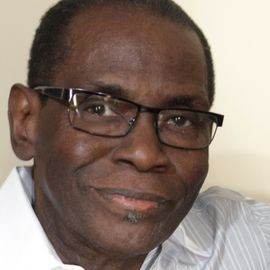
Keyboardists such as Herbie Hancock and Chick Corea influenced the young Cables. But, as he points out, I never paid attention to pianists when I was younger. I'd say Miles or Trane and their entire ensembles have had a greater effect on me than any one pianist.
The notion of the song is more essential than listening to someone's skills or technique. Miles' band stayed together like magic. You were transferred to another dimension. Cables attended Mannes College of Music for two years before joining The Jazz Samaritans, a band that comprised emerging talents such as Billy Cobham, Lenny White, and Clint Houston.
Gigs at the Top of the Gate, Slugs, and other New York venues drew notice to Cables' versatility, and before long he'd recorded with tenor saxophonist Paul Jeffrey, performed on Max Roach's Lift Every Voice and Sing, and had a brief stint at the piano bench with Art Blakey and the Jazz Messengers.
Cables traveled to the West Coast as part of a 1969 tour with tenor legend Sonny Rollins. By 1971, he had established himself as a major player in the jazz scenes of Los Angeles, where he originally lived, and San Francisco, where he also lived.
Collaborations and records with tenor saxophonists Joe Henderson and Sonny Rollins (Next Album:), trumpeters Freddie Hubbard and Woody Shaw (Blackstone Legacy), and vibraphonist Bobby Hutcberson highlighted Cables' diverse keyboard talents, which were typically performed on electric piano. Demand for his delicate accompaniment grew, and by the end of the 1970s, Cables had established himself as everyone's favorite sideman.
In 1977, hard-bop great Dexter Gordon persuaded Cables to join his quintet, which proved to be a watershed moment. Cables' two years with the re-appreciated tenor great reignited his enthusiasm for the acoustic piano and re-immersed him in bebop terminology.
I don't believe that one should be bogged in the mud all the time, trying to prove that this music is legitimate, says Cables. We don't need to demonstrate anything. But, in order to find your own voice, I believe you must first be sensitive to your background.
Cables' longest-lasting friendship in the late 1970s was with alto saxophonist Art Pepper. Cables, nicknamed "Mr. Beautiful" by Pepper, became Art's favorite pianist, playing on numerous quartet sessions for Contemporary and Galaxy, as well as joining Art for the remarkable duet album, Goin' Home, which would be Pepper's final recording session.
I've had the opportunity to perform with some of the world's finest players, says Cables, "but it's interesting, if you're not viewed as a bandleader, playing the same thing a lot of the time, it's easy to question, "Well, who are you really?" 'How do you truly feel?' And I have to ask myself that question from time to time because every time I play with someone new, I have to put on a new hat.
Joe Henderson, Roy Haynes, Max Roach, Art Blakey, Sonny Rollins, Freddie Hubbard, Woody Shaw, Sarah Vaughn, Tony Williams, Bobby Hutcherson, and Dizzy Gillespie are among the jazz performers he has played and recorded with. George Cables has established himself as a significant voice in modern jazz.
He is now working as a soloist, with trios and bigger groups, and as a clinician in college jazz departments. George Cables has contributed to records by Dexter Gordon, Art Pepper, Freddie Hubbard, Woody Shaw, Bobby Hutcherson, and many others, in addition to composing and arranging for his own albums.
He is known for his creative writing style and fresh interpretations of old tunes.