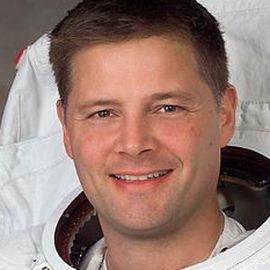
Lieutenant Wheelock, then a Lieutenant, graduated first in his flight class and was commissioned as an Army Aviator in September 1984. In the 9th Cavalry, he later served as a combat aviation Section Leader, Platoon Leader, Company Executive Officer, Battalion Operations Officer, and Commander of an Air Cavalry Troop in the Pacific.
Later, as an Advanced Weapons Research and Development Engineer, he was transferred to the Aviation Directorate of Combat Developments. Wheelock was accepted into Class 104 of the US Naval Test Pilot School and was assigned to the Army Aviation Technical Test Center as an Experimental Test Pilot after graduation (ATTC).
In the OH-58D, UH-60, RU-21, and C-23 aircraft, he concentrated his flight testing on tactical reconnaissance and surveillance systems. In support of the National Program Office for Intelligence and Electronic Warfare, he served as Division Chief for fixed-wing testing of airborne signal and imaging intelligence systems.
Wheelock earned a Master of Science in Aerospace Engineering from Georgia Tech while on active service in 1992. Wheelock was hired as a Space Shuttle integration test engineer at the Johnson Space Center in August 1996. His technical responsibilities included engineering liaison for Space Shuttle launch and landing procedures.
He was chosen to lead the vehicle integration test crew for the combined Space Shuttle and Russian Space Station Mir mission STS-86, as well as the lead engineer for hardware fit inspections on the International Space Station.
Wheelock has completed the Army Airborne and Air Assault Courses, Infantry, and Aviation Officer Advanced Courses, Combined Arms Services Staff School, Material Acquisition Management Course, and the US Army Command and General Staff College. Wheelock went for a tour of duty in support of Operation Enduring Freedom in July 2011.
He has accumulated over 2,500 flying hours in 43 different rotary and fixed-wing aircraft as a dual-rated Master Army Aviator Astronaut. Wheelock reported for NASA Astronaut Candidate Training in August 1998. He was assigned to the Astronaut Office ISS Operations Branch as a Russian Liaison after completing the initial two years of intense Space Shuttle and Space Station training.
He participated in the testing and integration of Russian hardware and software items produced for the ISS. He spent a lot of time creating and testing dual-language procedures for ISS personnel with the Energia Aerospace Company in Moscow, Russia.
Wheelock led combined the US/Russian teams to Kazakhstan's Baikonur Cosmodrome to monitor the first four unmanned ISS resupply capsules' bench inspections, inventory, loading, and launch.
In 2001, Wheelock was named Crew Support Astronaut for the ISS Expedition 2 crew, which spent 147 days in space from March to August 2001, and the ISS Expedition 4 crew, which spent 195 days in orbit from December 2001 to June 2002.
He was the main point of contact for all crew requirements, coordination, planning, and interactions, as well as the crews' principal spokesperson while in orbit. Wheelock was posted to the Mission Control Center in Houston, Texas, as a Spacecraft Communicator (CAPCOM) in August 2002.
He was the principal communication connection between the astronauts on orbit and the ground support team at the Control Center in this capacity. His efforts as a CAPCOM resulted in his appointment as the lead CAPCOM for the 194-day Expedition 8 mission aboard the International Space Station.
Wheelock spent 10 days living and working below onboard the Aquarius underwater laboratory during the NEEMO 6 mission in July 2004. He was assigned to NASA's Director of Operations – Russia in January 2005 and again in 2016, when he worked at the Gagarin Cosmonaut Training Center in Star City, Russia.
He was in charge of assisting NASA astronauts preparing for a trip on the International Space Station with their training, logistics, and administrative needs in Russia. Wheelock served as the main point of contact between Star City and NASA's Houston activities, which included medical, training, scientific, contracting, public affairs, and administration.
He was also in charge of NASA's contact with the Russian Space Agency, as well as the Russian aerospace industry. Wheelock was designated as T.J. Creamer's backup for the Soyuz TMA-17/Expedition 22/Expedition 23 mission to the International Space Station after his maiden spaceflight. From 2009 to 2010, Creamer conducted a successful 163-day mission.